
Photo Source: Traditional Home
Revolutionize Your Kitchen: The Ultimate Guide to Pantry Organization for Busy Families
The quest for a perfectly organized pantry is a universal desire for anyone who spends time in the kitchen. Envision a space where every ingredient is easily located, meal preparation flows effortlessly, and cooking becomes a joy rather than a chore. Today, we’re embarking on an exciting journey into the realm of pantry organization, drawing inspiration from the pristine, aesthetically pleasing images that grace our Pinterest feeds. The vision of food neatly arranged in stylish baskets, reminiscent of the clever “dinner baskets” concept shared by Unorganized Mommy, is incredibly motivating. My recent attempt to manifest this dream began with a few pre-loved bins I repurposed from another room, eager to bring structure to my own kitchen pantry. While admiring the picture-perfect inspiration, I couldn’t help but notice what appeared to be apples scattered on the floor of that immaculate pantry. For the sake of maintaining my organizational resolve and avoiding any potential pest concerns, I’ll optimistically conclude they are purely decorative!
Understanding Your Pantry: Space, Needs, and Aspirations
My current pantry, unlike the expansive walk-in versions often showcased in interior design magazines, is more compact. However, its shelving configuration offers ample opportunity for efficient organization, mirroring the structured setup seen in larger spaces. One significant challenge I consistently face, a sentiment shared by many home cooks, is finding an optimal storage solution for my growing collection of cookbooks. While I adore the idea of displaying them prominently on kitchen shelves for quick and easy access, our current kitchen layout simply doesn’t accommodate this. This particular conundrum is a key driver behind our upcoming kitchen remodel and redecorating project. During this exciting renovation, my primary objective is to thoughtfully reorganize all cabinets and meticulously design a dedicated, child-safe area specifically for my cookbooks, ensuring they remain well beyond the curious reach of my toddler. This strategic planning aims to not only protect my cherished recipes but also to foster a more serene, efficient, and beautifully functional kitchen environment for years to come.
Taming the Toddler Zone: Maintaining Pantry Order Amidst Playful Chaos
For parents of young children, the dream of a consistently organized pantry often collides with the energetic reality of a toddler’s world. I can invest considerable time and effort into meticulously arranging my pantry, only to discover it in delightful disarray the following day. The culprit? Tiny, inquisitive fingers with a penchant for “reorganizing” everything in their path. If a particular shelf happens to be just out of reach, it doesn’t present an obstacle; rather, it becomes an intriguing challenge. My resourceful little one will ingeniously scout for toy buckets, a small step stool, or even drag over a dining chair, determined to access even the highest, most tempting shelves. This playful yet disruptive intervention highlights a universal parental struggle: the delicate balance between desiring an orderly home and nurturing the boundless curiosity and relentless energy of a toddler. It demands a creative blend of clever storage solutions, effective child-proofing techniques, and an abundant reservoir of patience and good humor.
A Glimpse into Reality: The Before & After of My Pantry Project
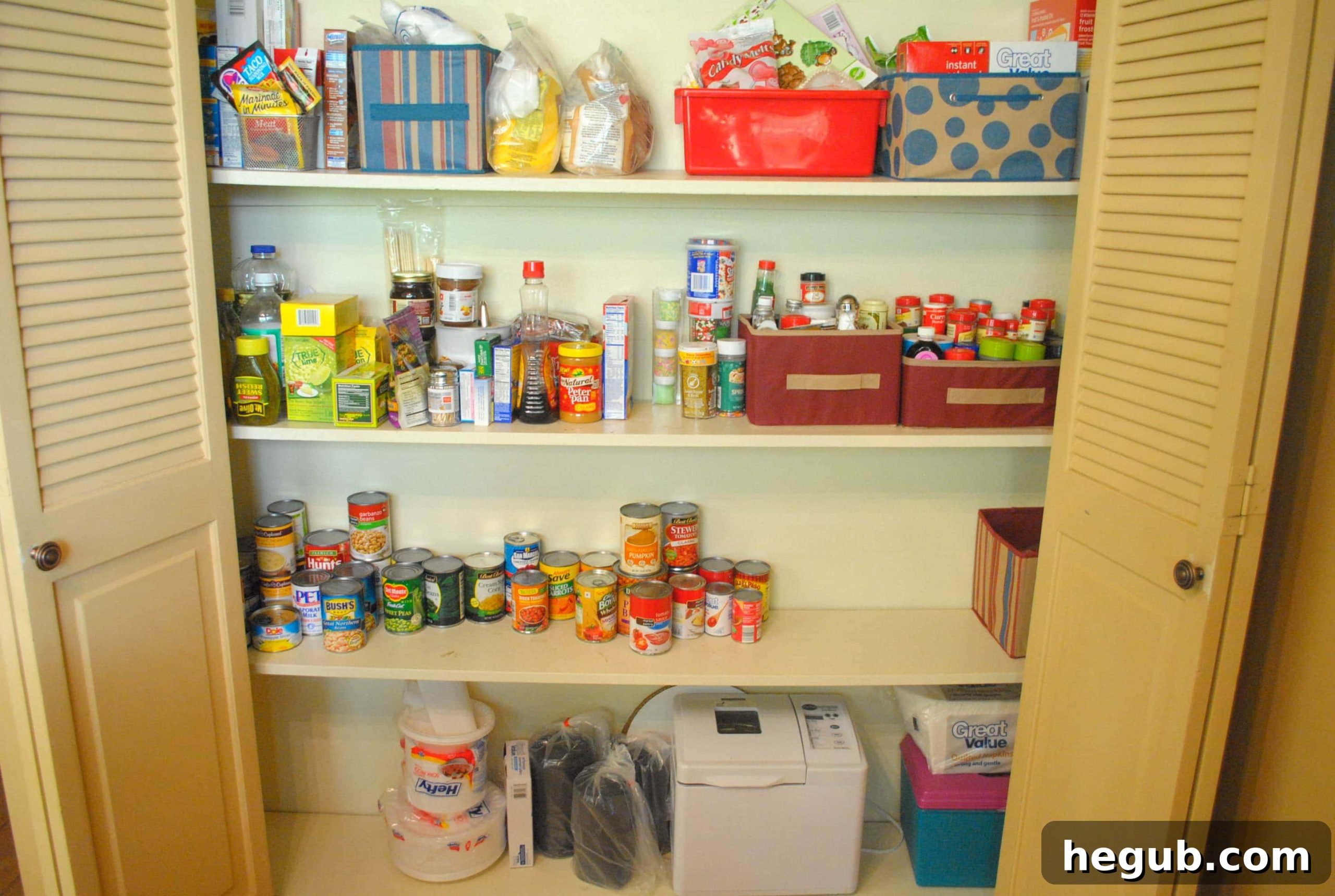
To truly appreciate the journey, let’s observe the “before” snapshot of my pantry. This candid image portrays the typical, albeit temporary, disorganization that frequently characterizes a busy family kitchen.
At the moment this photo was taken, the canned goods were, uncharacteristically, somewhat arranged. This is a rare occurrence, as these very items are usually my son’s absolute favorite toys to play with and, inevitably, “reorganize” into his own unique system. Their fleeting tidiness here represents a brief victory, often preceding a cascade of tins as he explores their gravitational properties and sound effects. This image perfectly encapsulates the ongoing, amiable battle for pantry order in a home brimming with the joyful chaos of an active toddler.
Now, let’s transition to the “after” picture, which showcases a significant and satisfying step forward in my journey toward a more functional pantry:
While this “after” image doesn’t quite achieve the flawless aesthetic of a Pinterest-perfect inspiration, it unmistakably signifies progress. It serves as a powerful reminder that real-life home organization is an ongoing process, a continuous journey rather than a fixed destination. My immediate next steps include investing in more appropriate storage boxes and bins. These will be crucial for better categorizing and containing various items, especially those ever-popular canned goods which, true to form, had already undergone another round of “rearrangement” by my diligent little helper between the “before” and “after” photo sessions. Despite these persistent challenges and the constant need for adaptation, I am genuinely overjoyed to simply have a pantry. Having previously lived in a home without one, I possess a profound appreciation for the luxury of dedicated food storage space, even if it demands continuous vigilance and a well-developed sense of humor!
Essential Tips for Creating a Functional and Toddler-Resistant Pantry
Cultivating an organized pantry that can withstand the daily demands of family life, especially with energetic toddlers, requires a thoughtful and strategic approach. Here are some highly actionable tips to help you establish a functional, accessible, and relatively chaos-resistant storage space:
1. Begin with a Thorough Decluttering:
The first and most crucial step is to completely empty your pantry. Methodically review every item: check expiration dates, promptly discard anything expired, stale, or no longer edible, and consider donating unopened, non-perishable goods that you know your family won’t consume. This foundational purge ensures that you are only organizing items you genuinely use and need.
2. Implement Smart Categorization and Zoning:
Group similar items together to create logical categories. Think in terms of “baking supplies,” “pasta and grains,” “everyday snacks,” “canned goods,” “spices and condiments,” and “breakfast essentials.” Once categorized, assign specific shelves or sections (zones) for each group. This system significantly streamlines the process of locating items and makes restocking far more efficient.
3. Invest in Effective Storage Solutions:
High-quality storage solutions are indispensable. Opaque baskets are excellent for concealing visual clutter and creating a uniform, tidy appearance. Clear, airtight containers are ideal for bulk items such as flour, sugar, rice, or pasta, allowing you to instantly see contents and monitor supply levels. Shelf risers or stackable shelves are fantastic for maximizing vertical space, preventing smaller items from getting lost at the back of deep shelves.
4. Strategize for Child-Proofing:
To effectively toddler-proof your pantry, consider installing child safety locks on lower pantry doors or drawers. Always store tempting or potentially hazardous items—such as glass jars, heavy cans that could cause injury, or cleaning supplies if your pantry shares space with a utility area—on higher shelves well out of reach. Additionally, designate a low shelf as a “toddler-friendly” zone, stocked with their snacks in sturdy, non-breakable containers. This gives them a safe and satisfying area to explore, potentially diverting their attention from other off-limits sections.
5. Embrace the Power of Labeling:
Labels are absolutely critical for maintaining long-term order, especially in multi-person households. Clear, legible labels on baskets, containers, and even shelves ensure that everyone knows where items belong and, more importantly, where they should be returned. This simple habit drastically reduces cleanup time and frustration.
6. Adopt the First-In, First-Out (FIFO) Method:
Practice the FIFO principle, particularly for perishable or frequently restocked goods. When purchasing new items, place them behind older stock to ensure that the oldest products are used first. This method is incredibly effective for cereals, pasta, spices, and canned goods, significantly minimizing food waste and ensuring freshness.
Anticipating the Future: Kitchen Remodel and Sustainable Organization
Our upcoming kitchen remodel presents a phenomenal opportunity to integrate even more robust and personalized organizational strategies. Beyond securing a safe and accessible spot for my beloved cookbooks, I plan to incorporate custom storage solutions meticulously designed to cater to our family’s unique needs. This might include pull-out drawers for easy access to heavier items, cleverly designed spice racks that keep seasonings visible and within reach, and perhaps even a dedicated “snack station” thoughtfully planned for both adult and child accessibility. The overarching goal is to craft a kitchen and pantry system that is not only visually appealing but also exceptionally functional, adaptable to our evolving family dynamics, and resilient enough to withstand the daily adventures of a busy household. Ultimately, it’s about creating a harmonious space that actively supports healthy eating habits, efficient meal preparation, and a generally calmer, more organized home environment, free from the constant struggle against clutter.
Remember, the pursuit of a perfect pantry is often an illusion. The true aim is to establish a system that genuinely works for *your* family, making daily life a little bit easier and significantly less stressful. Embrace the journey of organization, celebrate every small victory along the way, and never hesitate to adjust your system as your family’s needs and stages of life evolve. Happy reorganizing!
Have you visited our Products list? Be sure and check out Mommy Hates Cooking Products and Services.
Need more recipe ideas? Check out the Recipe Index by Mommy Hates Cooking.